Andy
Taxi DriverAndy is a traveling salesman who sells Travis Bickle several new firearms in a Brooklyn hotel room, furnishing the weapons and a way to practice with them. His encounter with Travis is brief, but its consequences extend beyond the sale: Andy converts Travis’s accumulating money and violent preoccupations into a portable arsenal, then sees enough of the buyer’s agitation to become wary of him.
Identity and Introduction
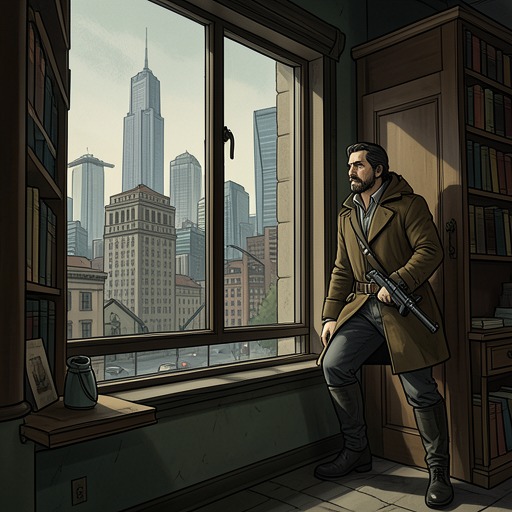
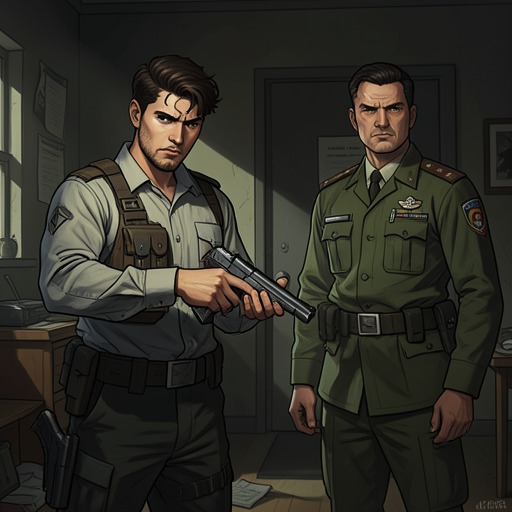
Andy enters the story through a meeting arranged by one of Travis Bickle’s acquaintances. The acquaintance introduces him on a street corner as a traveling salesman. Andy appears to be about twenty-nine and is carefully dressed in a dark pinstriped suit, white shirt, floral tie, and fashionable long hair. The description gives him the look of a conventional young professional, a contrast with the illicit and dangerous stock he is about to display.
The meeting takes place in Brooklyn. Travis pays the acquaintance thirty dollars from his own pocket before following Andy to the hotel, where the acquaintance leaves them. Andy’s room is clean and nearly bare: it contains a bed and desk, a small Blue Boy picture, and no sign of the ordinary domestic equipment that might suggest someone lives there. Its emptiness makes the room feel less like a home than a temporary, controlled setting for business.
The Firearms Sale
After locking the door, Andy goes to the room’s only closet and produces two light-blue Samsonite suitcases. He describes his merchandise as new, clean, anonymous, and superior to cheap novelty guns. The cases are specially locked; inside, rows of new firearms lie protected in gray packing foam. Andy lays the heavy cases on the freshly made white bed, making the concealed inventory the room’s sudden centre of attention.
Travis already knows what he wants: a .44 Magnum. Andy warns him that it is expensive, but Travis says he has money. Andy then takes the weapon from a soft leather case and handles it with the care of a prized object, tracing the blue metal with his fingertips. He also offers a Colt .25, presenting it as a small, light, readily carried gun, though he notes that it does not do as much damage. The assortment is not described merely as a collection of tools: Andy’s display, comparison, and handling turn the guns into products whose power and portability are part of the pitch.
The final price is a negotiated seven hundred dollars for three guns and a holster, reduced from Andy’s stated figure of seven hundred and fifty. Travis pays in seven new hundred-dollar bills. Andy moistens a fingertip to count the money, pockets it, and appears pleased with both the transaction and Travis’s judgement. The precise cash payment gives the exchange a blunt material form: Travis’s plan is no longer only an idea or an entry in his private thinking, but a purchase completed in the room.
Advice, Access, and Unease
Travis asks what a firearms permit would cost. Andy reacts with surprise and estimates that obtaining one would require at least five thousand dollars and considerable time; he suggests that six thousand might secure a permit as solid as the Empire State Building. He says he tries to avoid dealing with criminals because the risks are high and the returns poor. Travis does not have enough money for the permit. Andy points out that a permit would not let him carry guns in a taxi anyway, then gives him a white business card to take to a local shooting range, where, Andy says, he can pay without being questioned. Andy thus offers Travis a practical next step without resolving the legal obstacle Travis has raised.
During the payment, Andy notices the Vietnam insignia on Travis’s jacket and asks about his service. Travis answers briefly, then suddenly insists that he will never be made to return. The outburst breaks the transaction’s businesslike rhythm. Andy has been counting the cash; now Travis’s war memory surfaces with a force that makes him seem, in Andy’s assessment, to have said too much. Andy appears afraid of him. The account’s image of a spark when Travis takes the bag conveys the intensity of the moment as Travis experiences it, not a change in Andy’s conduct into open confrontation.
Andy wraps the firearms in an old sheet, puts them in a small blue nylon sports bag, and hands the bag to Travis. He then turns away to close and lock the suitcases and return them to the closet. As Travis heads for the door, Andy offers to escort him outside. The gesture is small, but it marks a change in the encounter: the salesman who had confidently displayed and priced his merchandise now treats the armed buyer with caution.
Character and Narrative Function
Andy is characterized chiefly through the transaction, and the scene keeps his motives within the limits of what he says and does. He presents himself as a careful businessman who distinguishes quality merchandise from cheap guns and claims to avoid risky criminal customers. At the same time, he supplies Travis with multiple firearms, accepts a large cash payment, and directs him to a shooting range where no questions will be asked. The contrast is not resolved into a fuller biography; it is part of the encounter’s uneasy commerce.
For Travis, Andy is the intermediary between a violent aspiration and the means to act on it. He recognizes the desired .44 Magnum, adds other weapons, takes payment, and packs the guns for transport. Yet Andy does not appear to know the larger purpose to which Travis may put them. The Vietnam exchange offers a brief, unsettling glimpse of the buyer that the sales pitch cannot contain: Andy’s expertise helps arm Travis, but his sudden apprehension suggests that he has encountered a danger he did not fully anticipate.